Herbicides

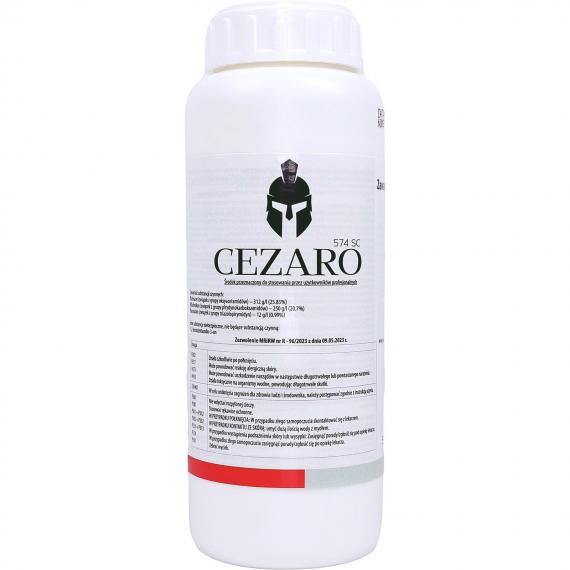
Cezaro 574 SC

​Cezaro 574 SC is a selective systemic herbicide used primarily in winter wheat, winter triticale, winter barley, and winter rye crops to effectively control monocotyledonous and dicotyledonous weeds. Details

Description

Active Ingredients and Formulation:

  • Flufenacet: 312 g/L
  • Diflufenican: 250 g/L
  • Florasulam: 12 g/L
  • Formulation: Suspension Concentrate (SC)

Mode of Action:

  • Flufenacet: Absorbed mainly through the roots and hypocotyls of germinating weeds, inhibiting the synthesis of long-chain fatty acids, leading to weed death.
  • Diflufenican: Inhibits the biosynthesis of carotenoids essential for photosynthesis, causing bleaching and decomposition of weed foliar tissues.
  • Florasulam: Inhibits the enzyme acetolactate synthase (ALS), essential in amino acid synthesis, leading to cessation of weed growth and development.

Usage Recommendations:

  • Crops: Winter wheat, winter triticale, winter barley, winter rye
  • Recommended Dose: 0.4 L/ha
  • Application Timing: Autumn, from the 1-leaf stage to mid-tillering (BBCH 11-25)
  • Recommended Water Volume: 200-300 L/ha
  • Application Method: Medium-droplet spraying
  • Maximum Number of Applications per Season: 1cancer.gov+2pmc.ncbi.nlm.nih.gov+2downloads.regulations.gov+2

Weed Control Spectrum:

  • Sensitive Weeds: Avena fatua (wild oat), Geranium pusillum (small-flowered crane's-bill), Viola arvensis (field pansy), Stellaria media (common chickweed), Papaver rhoeas (common poppy), Matricaria maritima (sea mayweed), Capsella bursa-pastoris (shepherd's purse), Veronica hederifolia (ivy-leaved speedwell), Galium aparine (cleavers), Anthemis arvensis (corn chamomile), volunteer oilseed rape
  • Moderately Sensitive Weeds: Centaurea cyanus (cornflower)

Precautions and Recommendations:

  • Application Conditions: Avoid application on crops weakened or affected by diseases, pests, frost, or drought. Do not apply at temperatures below 5°C or above 25°C, after night frosts, or before anticipated frosts, on crops covered with frost, before heavy rainfall, or in windy conditions that may cause spray drift.
  • Environmental Protection: Maintain a 4-meter buffer zone from surface waters to protect aquatic organisms and a 10-meter buffer zone from field edges to protect non-target plants.
  • Crop Rotation: In autumn, wheat, barley, rye, and triticale can be cultivated. In spring, after plowing to 10 cm, flax can be grown; after plowing to 20 cm, corn and root crops (e.g., carrots) can be cultivated. After 2 years from application and plowing to 30 cm, legumes can be grown. After 3 years from application and plowing to 30 cm, sunflower and onion can be cultivated.

Similar products